Painting Ceramic Tile
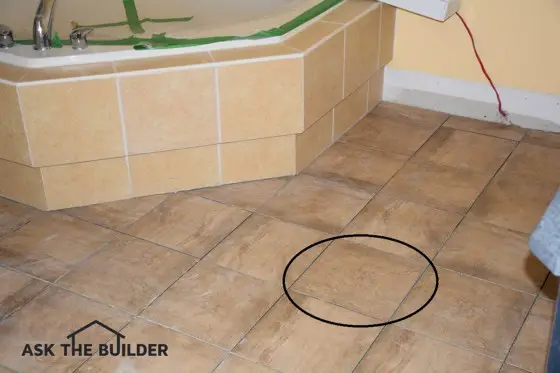
Many of the floor tiles in this photo don’t match the circled one. The homeowner thought they’d all match. Photo Credit: Sandy Mayor
"Painting a ceramic tile floor is fast and it can last. The key is to use the right paint and once cured, coat it with three layers of clear water-based urethane."
DEAR TIM: I am thinking about painting ceramic tile in my home. This tile is in several rooms both on the floor and walls.
Our budget does not allow replacement at this time. Is ceramic tile painting a reasonable project, or will it end in disaster?
What do I need to know about painting ceramic tiles that will make me look like a hero in front of my husband, the man who thinks this is a folly of an idea? Sharon D., Carrollton, TX
Painting Ceramic Tile Floor - One Color or Stencils
Related Links
Eliminate Grout Lines Before Painting - Good Idea?
How to Repair Chipped Tile Before Painting
DEAR SHARON: Oh, you're going to be astonished by the praise and compliments that will be showered upon you by your friends and neighbors once they discover how you transformed your home by painting the ceramic tile.
The best part is that the cost of the job will be less than what you and your Doubting-Thomas husband will spend at a fine restaurant for a dinner for two. He is going to be ordering some crow followed by a large helping of humble pie.
What Ceramic Tile Can be Painted?
You can paint any ceramic tile that will not be subject to lots of water on a routine basis. This means floor tile, wall tile, and countertop tile can all be painted. You can even do decorative painting on ceramic tile.
The only tile I would never paint is that ceramic tile within a shower or above a bathtub. The high levels of moisture in these areas cause most paints to peel from the ceramic tile in a short amount of time.
Free & Fast Bids
CLICK HERE to get FREE & FAST BIDS from local painters who can paint your tile next week.
Should I Deep Clean Tile Before Painting?
Yes, the ceramic tile needs to be deep cleaned before painting. Paint is just colored glue and it sticks best to clean surfaces.
The first step in the process is to deep clean the ceramic tile and grout. You must remove all dirt, oil, wax, grease, mold, etc.
What is the Best Ceramic Tile Cleaner?
Certified organic oxygen bleach is the best ceramic tile cleaner.
I would start the process using Stain Solver certified organic oxygen bleach.
This product will deep clean all grease and dirt from the tile and the grout. You must have clean tile for the paint to stick to the glossy tile.
The cleaner you get the tile, the better chance you have of overall success. Keep in mind that paints of any type are simply glues that have color in them.
Glues prefer to stick to surfaces that are squeaky clean. They stick even better if the surface is slightly rough.
You can rough up the tile after using Stain Solver by doing a follow-up cleaning with a mild abrasive cleaner like Soft Scrub.
Cleaning Ceramic Tile Video
Watch this video to see how easy it is to clean ceramic floor tile.
What Paints Stick Well to Ceramic Tile?
Oil-based paints stick very well to ceramic tile. They are harder and harder to find.
I've had fantastic results over the years painting ceramic tile with oil-based paint. It is getting harder to find this paint because of environmental issues, but rest assured, it really sticks to things once it is dried and has cured.
Water-based paints can peel readily from glazed ceramic tile surfaces. You may have great success with epoxy paints, but test these in a small area as they might be hard to use the first time.
Newer urethane-resin water-based paints are your best alternative if you can't locate oil-based paint. Urethane resin is often found in outdoor porch paint.
CLICK HERE to get FREE & FAST BIDS from local painters who can paint your tile next week.
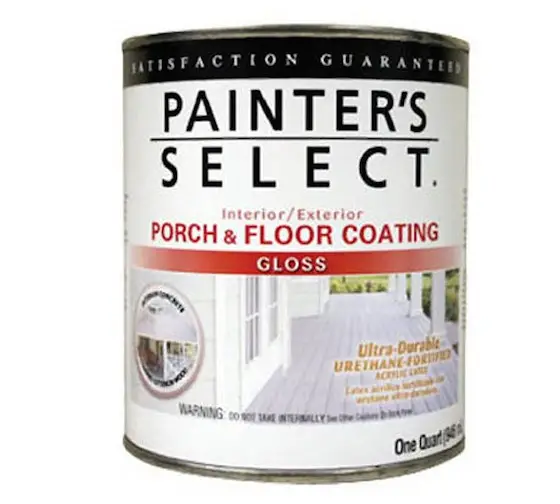
Here's a great urethane-fortified paint. That's why on the label it says it's for porches and floors! It's tough enough to walk on so you know it will perform really well on your vinyl siding where no one can walk except squirrels. CLICK THE IMAGE NOW TO have this paint delivered to your home.
What is the Best Paint Sheen to Use?
Use a semi-gloss or high gloss paint for the job. If the paint is thick or hard to brush or roll, use a little paint thinner to slightly dilute the paint. Always follow the directions on the paint-can label with respect to the maximum amount of thinner you can add.
Use masking tape to protect surfaces next to the ceramic tile. Use tapes that have less-aggressive acrylic adhesives so when they are removed, they do not damage the surface that was taped.
Can You Stencil Patterns on Ceramic Tile?
Yes, you can paint stencil patterns on ceramic tile.
Decorative painting on ceramic tile is easy. You have unlimited design options on any ceramic tile surface. Keep in mind that if you grow tired of the design, you can paint over it
Stenciling over the finish paint will allow you to create borders on walls, floors or countertops. You can have scads of fun with stencils or even two-tone paint designs.
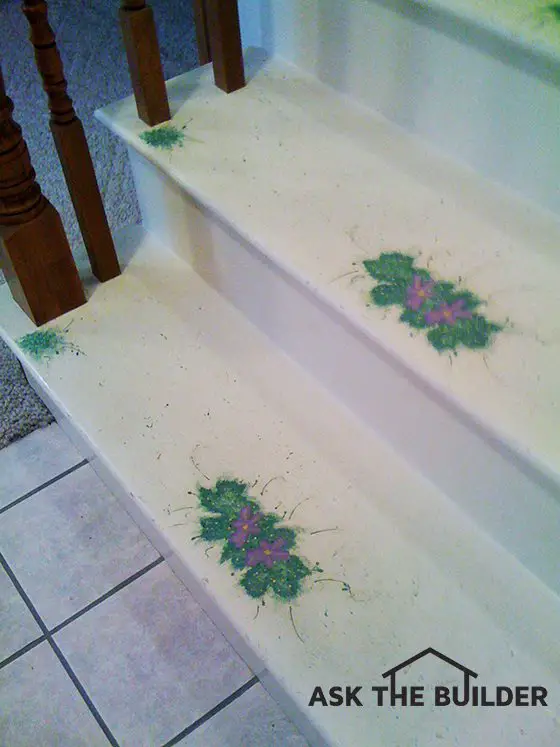
These steps are painted and have a great stencil pattern on each tread. There are highlights as well on the ends of each tread. ©2017 Tim Carter
Let your mind run wild, and experiment on a small section of ceramic tile. If you don't like what you see, start over.
How Do You Protect the Paint on the Tile?
Once the finish paint has dried for two or three days, coat it with two coats of clear water-based urethane. This urethane is very sticky and will adhere to the fresh oil paint.
Avoid using oil-based urethane as many of them have a tendency to develop a golden patina over time. You may find the amber color of this patina to be objectionable. The water-based urethanes stay clear forever.
The urethane is an integral part of the paint job. Most urethanes are very hard and resist water and foot traffic or abuse from plates, glasses, and cookware on countertops.
It's a known fact that urethanes do a fantastic job of protecting hardwood floor finishes for years. They do the same for painted surfaces. This is especially true for painted ceramic tile floors. The urethane finish will protect the colorful paint and provide you with years of beauty. There are thousands of basketball courts that are living proof that painted floors can handle abuse and still look good with minimal care.
Should I Repair Chips Before Painting Tile?
Be sure to repair any chips in the tile before you paint. Quick-drying epoxies are an excellent material to use for this purpose. Caulk all cracks as well. Be sure the caulk cures for several days before you paint it. Some water-based caulk will shrink if you squirt them into wide or deep cracks. Use caulking backer rod, if necessary, to fill deep cracks. Generally speaking, a bead of caulk should only be as deep as the caulk bead is wide.
Can I use Multiple Paint Colors or Tones?
Yes, consider using multiple colors when painting your ceramic tile. Creating geometric patterns by painting separate tiles different colors can yield stunning results.
You can also paint stripes or borders with ease. On large ceramic tile floors, a border can be designed that compliments the placement of a large area rug that is used in the center of a room or a runner carpet in a hallway.
Author's Note: We've received other questions with similar problems or questions. Here's one from E.J. Vincent of California regarding her ceramic tile painting project.
"I want to paint my own design onto ceramic tile, like the ones you would buy at Home Depot. Is there a special ceramic tile paint and sealer I need to use? The ceramic tiles will be incorporated in with the same unpainted tiles on the kitchen cabinet top and backsplash."
CLICK HERE to get FREE & FAST BIDS from local painters who can paint your tile next week.
Column 651

Tim built custom homes and did ultra-custom remodeling for 20+ years before launching his Ask the Builder media presence. He was selected as one of the Big 50 by Remodeling magazine in 1993. This award gave birth to Ask the Builder in October 1993. Tim also operates https://DrawPlumbingPlans.com. His @askthebuilder YouTube channel was the first home improvement channel on YouTube.

I would like to paint the ceramin tiles in my pool is that possible?
Can I paint the tiles in my bathroom. I can't match it with anything because it's from the late '50s.
I have existing ceramic tile in light green on my kitchen backsplash.
I do not want to remove the tile because its in good condition except for the colour.
Is there a paint I could use to stencil designs on the tile.
Thanks.
Hi Brenda! I'm not sure if you found the answer that you were looking for, but my guess would be to use your 'stencil designs' on the tile along with the paint that Tim already recommended in his article on this page in his response to Sharon. That would have been nice to see how Sharon's project came out and if she was able to accomplish what she wanted. Hope she comes back here to 'strut her stuff'! I also have a bathroom that has ceiling to floor (baseboard) tiles! It's in an old cape cod style home on 2nd fl. bath and looks like a hospital/clinic bathroom. It's a green color along w/those old medicine cabinets w/the 2 florescent long strip lights on ea side of mirror. Pretty freaky looking. Would love to turn/pain the green tile to baby blue. Hoping to find a solution, but I think Tim pretty much summed it up. My only problem is that the tiling is along the bathtub as well, so I'm not sure how I'm going to be able to work around that. Good luck to you!
Krylon Fusion spray paint its made for plastic but works extremely well even in areas regularly exposed to water. I've been using this stuff for years with my work on countless bath and kitchen makeovers and have never had a single failure to date. As long as you clean the tile real well no primer is needed. Use several light coats and the important thing is to let it dry untouched for at least 7 days but as much as 10 in humid climates. then go over the surface with a extra fine wet dry sand paper thats slightly damp just to remove any burrs in the finish and then top coat with a non yellowing clear coat.
I have 9 18inch glossy ceramic tiles surrounding a gas fireplace. Can these tile be painted since there is heat?
Yes they can. Extreme heat will damage any paint. Use common sense.
In connection with the question re painting tiles surrounding a gas fireplace, what do you mean by "use common sense"?
Well, I mean think about what I said in the phrase before the one in question. If you were told that heat could damage paint on tile, what might you do to see if this is true at your home? What simple thing could Jane have done to see if she could paint with success around her fireplace? Think about that. I'll give you a clue. Before we put a man inside a capsule on top of a rocket, we did something else. Common sense is simply a matter of engaging your brain to think about how you might use *sound judgment* before doing practical matters.
I have seen a lot of articles and videos online showing people painting shower tiles. Any update on this?
Yes. It's a mistake. Do not paint shower tiles.
I painted shower tiles with really good success years ago. Used white epoxy from a bath/sink paint kit by Rustoleum. It's a two-part paint that requires mixing prior to use and has high gloss, but if you follow the directions, you should be very pleased. Mine still looked good 4 yrs after doing it...right up to time we sold the home...and it was used regularly by two teens!
Do you paint over the grout as well? Or only on the tile?
You can paint over grout too. Painting tile, in my opinion, is a last-resort thing.
This is without a doubt one of the most irresponsible posts I have seen in a long time. As a contractor, I would never recommend this for several reasons. First and foremost us that it is very likely to disappoint. Nobody wants to see a painted tile, it screams cheap. Secondly, when you go to sell your house, expect to replace the job or lose value on your house. Thirdly, there are maintenance issues, most places that are tiled are tiled for a reason (I.e. surrounds, backsplashes, floors). These areas have wear issues that painted surfaces are just not meant to deal with. Epoxy paint will mitigate some of these issues but not all of them plus epoxy paint has its own issues. If a person wanting to hand paint a few tiles with a design is one thing but to do what has been suggested is just plain folly.
Andy, until you've tried it, I suggest you try to lower the volume of your displeasure. You're a contractor, right? Do you put clear urethane on hardwood floors? Is wood softer than glazed tile? So tell me, how do multiple coats of a high-quality urethane work to protect years of foot traffic on hardwood? Why do you feel it would do any less on tile? Have you seen basketball games on TV or in person? You do realize all the lines, logos and whatever on the floor are paint don't you? What protects it from harm? The urethane over the paint. The biggest issue would be metal cans that would be slid across a painted ceramic countertop.
I suggest you try this method on a small sample section of tile and see what you think. You'll be amazed. FYI - Contractors like you are the hardest people to convince of anything because you get set in your ways. And your comment about "Nobody wants to see painted tile, it screams cheap." is so far off base I can't believe it. Talk to the owner of a high-quality tile store who sells expensive painted tiles and she'll set you straight.
i want to paint my kitchen tiles but ones i have seen in the past look horrible full of brush marks what do you suggest thanks.
Jill, use my search engine here. Go find my Painting Kitchen Cabinets video and watch it. I show you in the video how to avoid brush strokes by using a special additive in the paint.
What is a brand of water based urethane you recommend? I'm finding a bunch of different options with slight differences. Something I can pick up at Home Depot or sherwin-williams preferably.
I've had good luck with Varathane.
Hello, I'm trying to make hand painted tiles to mix with plain tiles. Would you still use urethane as a sealer? Would it be okay when you install them? I know you've been asked this before but I can't find your response.
Yes. That would work.
Question: I have a lot of ceramic tile on my covered, screened back porch. It gets slippery as ice when moisture in the air condenses on it. Can I put urethane directly on the tiles, without painting ? If so, is there a urethane with impregnated substance that would yield a rough enough texture to mitigate slipping ? Thanks !
Do you think think process could work for a floor in a commercial retail space? We are opening a bakery. This would be done in the front of the bakery where people shop. Replacing the ugly original tiles is out of our budget. Thoughts? Any advise would be appreciated.
Do you need a primer before painting the tile?
The tile on my kitchen back splash was painted an ugly color by the previous owner using a latex paint. The tile also has a texture to it, so not smooth. How would you recommend preparing the tile for new paint?
I have rough Italian terra cotta type tile on my kitchen backsplash. I would like to white wash it, so a little of the color comes through, but it looks more white than orange. Also, if the whitewashing becomes damaged while cleaning it, it is less likely to show on white washing than solid painting.
Is it possible to white wash tile, and if so, what is the correct process?
I was doing a Google search to see if I can paint my italian terracotta backsplash tile and found your comment. Did you end up whitewashing your tile? If so, how did it turn out and are you pleased with it?
I have border tile (ceramic) in my pool. They are in great shape, but very ugly. Is there a way to change the color without changing the tile?
Hi there,
What are your thoughts on using a marine paint (for boats)?
Hi Tim,
Recently purchased a home with the ugliest kitchen I have ever seen. I don't have alot of money to replace, etc. , so I was hoping you can give me some tile advice. I would like to know if I can use the Krylon paint that looks like granite so that the tiles can have a whole new look instead of just paint. I would like to show you a before picture and what I would like it to look like after picture but it doesn't give me the option here. With that being said, can you please suggest what would be the best overall paint to achieve a granite look.
Tim I also want you to know that I'm referring to counter tiles and some wall tiles but mostly counter tiles and I don't know what to do..." is there any way that I can show you it before picture?
We painted the tile in our bathroom about 6 years ago and it has held up perfectly well. We don't hesitate to recommend it as an alternative to tile replacement.
Jason Cook,
Do you mind sharing if you use the same epoxy paint then use urethane to seal? We want to replace the tile walls in the tub area & want to incorporate my daughter's hand painted pieces as accent, but not sure if it's gonna work. thanks
In researching the topic of painting tiles & trying to figure best way to do a conservative remodel of our upstairs bathrooms. I came across rustolem tub & tile refinishing kit.
I was skeptical at first but the customer feedback & the before & after results look amazing on amazon
It doesn't allow for painting pretty pics but it seems to do a great job in refinishing old, out of date tubs, tiles vanity tops & tile.
After reading the comments listed here I thought some of you might benefit from this info.
I'm planing on refinishing my 2 tubs in the next few weeks.
I want to white wash the ceramic tile in my kitchen, is it possible? What do I need to do it?
This is a great article, If whitewash is not possible I definitely doing this!
It's possible, but I can't speak to how washable the whitewash will be.
The whitewash will stick to the tile. Be sure to read ALL of my whitewash columns here at my site.
Especially the one with the secret recipe in it. Just use my search engine.
Hi Tim, I have been researching painting my ceramic bathroom tile floor.
I have surveyed countless sites and Sherwin Williams representatives and they cannot stand behind any of their products for this job. I believe in those who have done a successful job which it seems you have. I purchased floor and porch enamel from SW latex paint. They do not endorse the product for this but I’m wondering if you recommend priming first? Product info states no primer is needed to be used on concrete or wood floor. Would you prime? Also would you top coat w water based urethane still even tho SW states it’s not needed due that too coat of the satin finish is a component in this paint? Any advice is great? Also what about a marine paint? Thank you! Debra
Hi, Tim. I love your website! I don't know if you'll see this, but I just have one question:
I want tile in an usual color and I more or less only have three options with that--buy white ceramic tile and paint it myself, have it professionally refinished (which I will have done for shower wall tile), or have ceramic tiles custom ordered (which would be a minimum of $15/sq. ft at the quotes I could find). So painting it myself seems to be the most reasonable option for me.
So my question is: which is better, installing the tiles first and then painting them, or painting them, letting them cure fully, and then installing them with unsanded grout? I feel like installing them later would look better. This would be with urethane paint and installed on bathroom walls (not shower walls).